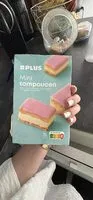
Vegetarian according to the ingredient list. Note: mono- and diglycerides (E471) can come from animal fat.
Ingredients 21
from most to leastWater. It comes first when the product holds a lot of it, as drinks, soups and sauces do.
Ground wheat without bran and germ. Contains gluten.
More about gluten ›Usually granulated sugar from sugar beet or cane. An added sugar: it sweetens and gives colour and structure in baking.
More about sugar ›Fat from the fruit of the oil palm, partly saturated and solid at room temperature.
More about palm oil ›Glucose syrup is a sweet syrup, usually made from corn or wheat starch. It sweetens, keeps products soft and is cheaper than sugar. Glucose-fructose syrup is the same with more fructose in it.
More about glucose syrup ›Contains milk. Allergens are printed in bold or otherwise set apart on the label, so you can spot them quickly.
More about milk ›Oils from plants; which ones are sometimes given in brackets. Palm oil has to be named. Coconut: the flesh of the coconut. In the EU it does not count as the allergen ‘nuts’.
Starch treated so it thickens better and stays stable when heated or frozen. Not genetic modification.
A sweet syrup made from starch, part of its glucose turned into fructose. An added sugar.
Lets fat and water mix without separating, as in mayonnaise or chocolate. Which one follows (often lecithin).
Milk sugar. People who are lactose intolerant can often take only a little; it is not a milk protein.
More about lactose ›- 12Apricot purée Abrikozenpuree
Table salt (sodium chloride). Adds taste and helps against spoiling. Adults are advised to eat no more than 6 grams a day.
Makes a product set to a jelly, like pectin or gelatine.
More about phosphates ›More about carrageenan (e407) ›Makes a product thicker or creamier, like guar gum or xanthan gum.
Makes it more acidic, for taste and keeping. Which acid follows.
Protein from milk. Contains milk.
Flavourings give taste or smell. ‘Natural flavouring’ (natuurlijk aroma) comes from a natural source; ‘flavouring’ (aroma) on its own may also be artificial.
More about flavourings ›Keeps the acidity at a set level, for taste, colour and keeping.
- 20Bietensapconcentraat
Adds colour. Which one follows, by name or E-number.
More about colourings ›
water, TARWEBLOEM, suiker, palmvet, glucosestroop, gepasteuriseerde volle MELK, plantaardige oliën (kokos, raapzaad, palm), gemodificeerd zetmeel, glucose-fructosestroop, emulgator (E472a, E471), lactose (MELK), abrikozenpuree, zout, geleermiddel (E440, E450, E339, E407), verdikkingsmiddel (E401, E415), voedingszuur (E330), MELKEIWIT, natuurlijk vanillearoma met andere natuurlijke aroma's, zuurteregelaar (E509, E332), bietensapconcentraat, kleurstof (E160a). Kan ROGGE, EI, AMANDEL, HAZELNOOT en PISTACHENOOT bevatten.
Label changed on 18 November 2026
- Energy344kcal
- Fat16.9 gmedium
- Sugars22.3 gmedium
- Salt0.5 gmedium
Per 100 g.
Prices€ 2,39 at PLUS
- PLUS€ 2,39€ 10,86 / kg
Price history
The price history appears here.
The line is the regular shelf price, read every week, without temporary offers. Updated 2026-09-01.
Alternatives
On the same shelf ›Similar
See all Conditorei Coppenrath & Wiese - Appel Strudels - 2 Stuks · € 2,992 shops
 Aviko Churros300 g · € 2,99D3 shopsKoopmans Pannenkoeken origineel kant-en-klaar540 g · € 3,35C3 shops
More choice on this shelf
Lists, in Dutch, with every product’s ingredients; the number is how many are on it.
Without what this contains
Something wrong? Report it
Label seen . The data is collected from supermarket websites and may differ from the pack.
Photos: Open Food Facts, CC BY-SA