Ingredients 19
from most to leastVegetable oil from rapeseed, low in saturated fat.
Water: water. It comes first when the product holds a lot of it, as drinks, soups and sauces do. Starch: a thickener from maize, potato or wheat, for example. When it comes from a grain with gluten, the label has to say so.
More about sugar ›Water. It comes first when the product holds a lot of it, as drinks, soups and sauces do.
Contains tree nuts. Allergens are printed in bold or otherwise set apart on the label, so you can spot them quickly.
More about tree nuts ›Vinegar from fermented alcohol, usually from sugar beet.
Usually granulated sugar from sugar beet or cane. An added sugar: it sweetens and gives colour and structure in baking.
Starch treated so it thickens better and stays stable when heated or frozen. Not genetic modification. Maize: a grain without gluten. Potato: potato.
A kitchen herb (parsley).
Contains egg. Allergens are printed in bold or otherwise set apart on the label, so you can spot them quickly.
More about egg ›Table salt (sodium chloride). Adds taste and helps against spoiling. Adults are advised to eat no more than 6 grams a day.
Makes it more acidic, for taste and keeping. Which acid follows. Lactic acid: an acid (E270) formed by fermentation. Despite the name usually not from milk and without milk protein.
More about milk ›Keeps the acidity at a set level, for taste, colour and keeping.
More about preservatives ›Dried parts of plants for taste, such as pepper, nutmeg or cinnamon. Which ones need not be said. Mustard seed: seed of the mustard plant. Mustard is one of the 14 allergens. Turmeric: a yellow spice from a rootstock (turmeric); it also adds colour.
More about mustard ›Slow moulds and bacteria, so it keeps longer. Which ones follow.
More about sorbic acid and sorbates ›More about benzoic acid and benzoates ›Make a product thicker or creamier, like guar gum or xanthan gum.
Flavourings give taste or smell. ‘Natural flavouring’ (natuurlijk aroma) comes from a natural source; ‘flavouring’ (aroma) on its own may also be artificial.
More about flavourings ›- 17Invert sugar Invertsuiker
A powder of broken-down starch, slightly sweet. Adds bulk and a fuller texture.
An extract of yeast with a savoury taste; it holds glutamate by nature.
More about yeast extract ›
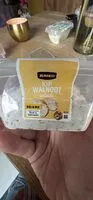
Koolzaadolie, gekookt kippenvlees 30,7% (kippenvlees Beter Leven 1 ster 26,1%, water, zetmeel [aardappel, maïs], zout, suiker, zuurteregelaar: E500), water, WALNOOT 10,9%, natuurazijn, suiker, gemodificeerd zetmeel (maïs, aardappel), peterselie, gepasteuriseerd scharrelEIgeel Beter Leven 1 ster, zout, voedingszuur: melkzuur, zuurteregelaar: E262, specerijen (MOSTERDzaad, kurkuma, rode peper, uienpoeder, knoflookpoeder), conserveermiddelen: E202 en E211, verdikkingsmiddelen: E412 en E415, natuurlijke aroma’s, invertsuiker, maltodextrine, gistextract. Kan tarwe (gluten), schaaldier, vis, pinda, soja, melk, amandel, cashewnoot, pistachenoot en selderij bevatten
Label changed on 18 November 2026
- Energy367kcal
- Fat36.1 ghigh
- Sugars2 glow
- Salt1.2 gmedium
Per 100 g.
Prices€ 2,99 at Jumbo
- Jumbo2 voor € 4,50 until 15 December€ 2,99€ 14,95 / kg
Price history
The price history appears here.
The line is the regular shelf price, read every week, without temporary offers. Updated 2026-11-18.
Alternatives
On the same shelf ›Similar
See all Pittige Kip Salade 250 g250 g · € 1,661 shop
 Kip-Saté Salade 250g250 g · € 1,891 shop
 Johma Pikante kip-kerrie salade175 g · € 2,98Dup to € 3,09 · 4 shops
 Johma Kip-samba salade175 g · € 2,89Dup to € 3,19 · 4 shops
 Johma Kip-kerrie salade175 g · € 2,89Dup to € 3,19 · 4 shops
More from Jumbo
See allMore choice on this shelf
Lists, in Dutch, with every product’s ingredients; the number is how many are on it.
Without what this contains
Something wrong? Report it
Label seen . The data is collected from supermarket websites and may differ from the pack.
Photos: Open Food Facts, CC BY-SA