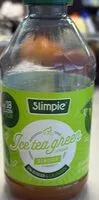
Vegan according to the ingredient list.
Ingredients 9
from most to leastWater. It comes first when the product holds a lot of it, as drinks, soups and sauces do.
Makes it more acidic, for taste and keeping. Which acid follows. Citric acid: an acid found naturally in citrus fruit (E330). Gives a fresh taste and helps keep the product.
Caffeine is in coffee, tea, cola and energy drinks. A drink with more than 150 mg per litre must say ‘high caffeine content’ (hoog cafeïnegehalte) on the label.
More about caffeine ›Flavourings give taste or smell. ‘Natural flavouring’ (natuurlijk aroma) comes from a natural source; ‘flavouring’ (aroma) on its own may also be artificial.
More about flavourings ›Sweeten with few or no calories. Which ones follow. Sucralose: a sweetener (E955), about 600 times as sweet as sugar, without calories. Steviol glycosides from stevia: a sweetener (E960) from the stevia plant, hundreds of times as sweet as sugar.
More about sweeteners ›Slow moulds and bacteria, so it keeps longer. Which ones follow.
More about preservatives ›More about sorbic acid and sorbates ›More about benzoic acid and benzoates ›Keeps the acidity at a set level, for taste, colour and keeping.
Slows fat or colour spoiling through oxygen. Which one follows (often ascorbic acid). Ascorbic acid: vitamin C (E300). Slows browning and works as an antioxidant.
Keeps a product in shape, so it does not separate or settle. Which one follows. Xanthan gum: a thickener (E415), made by bacteria fermenting sugar.
Water, voedingszuur (citroenzuur), groene thee extract (1%), natuurlijk limoen aroma, zoetstoffen (sucralose, steviolglycosiden uit Stevia), conserveermiddelen (E202, E211), zuurteregelaar (E331), antioxidant (ascorbinezuur), stabilisator (xanthaangom)
- Energy10kcal
- Fat0 glow
- Sugars0.3 glow
- Salt0.1 glow
Per 100 ml.
Prices€ 1,99 at Jumbo
- Jumbo€ 1,99€ 6,63 / l
Price history
The price history appears here.
The line is the regular shelf price, read every week, without temporary offers. Updated 2026-09-13.
Alternatives
On the same shelf ›More from Slimpie
See all Slimpie Aardbei siroop 0% suiker0,65 l · € 3,49C3 shops
 Slimpie Bloedsinaasappel grapefruit siroop 0%0,65 l · € 3,49C2 shops
More choice on this shelf
Lists, in Dutch, with every product’s ingredients; the number is how many are on it.
Other choices for sugar-free
Something wrong? Report it
Label seen . The data is collected from supermarket websites and may differ from the pack.
Photos: Open Food Facts, CC BY-SA